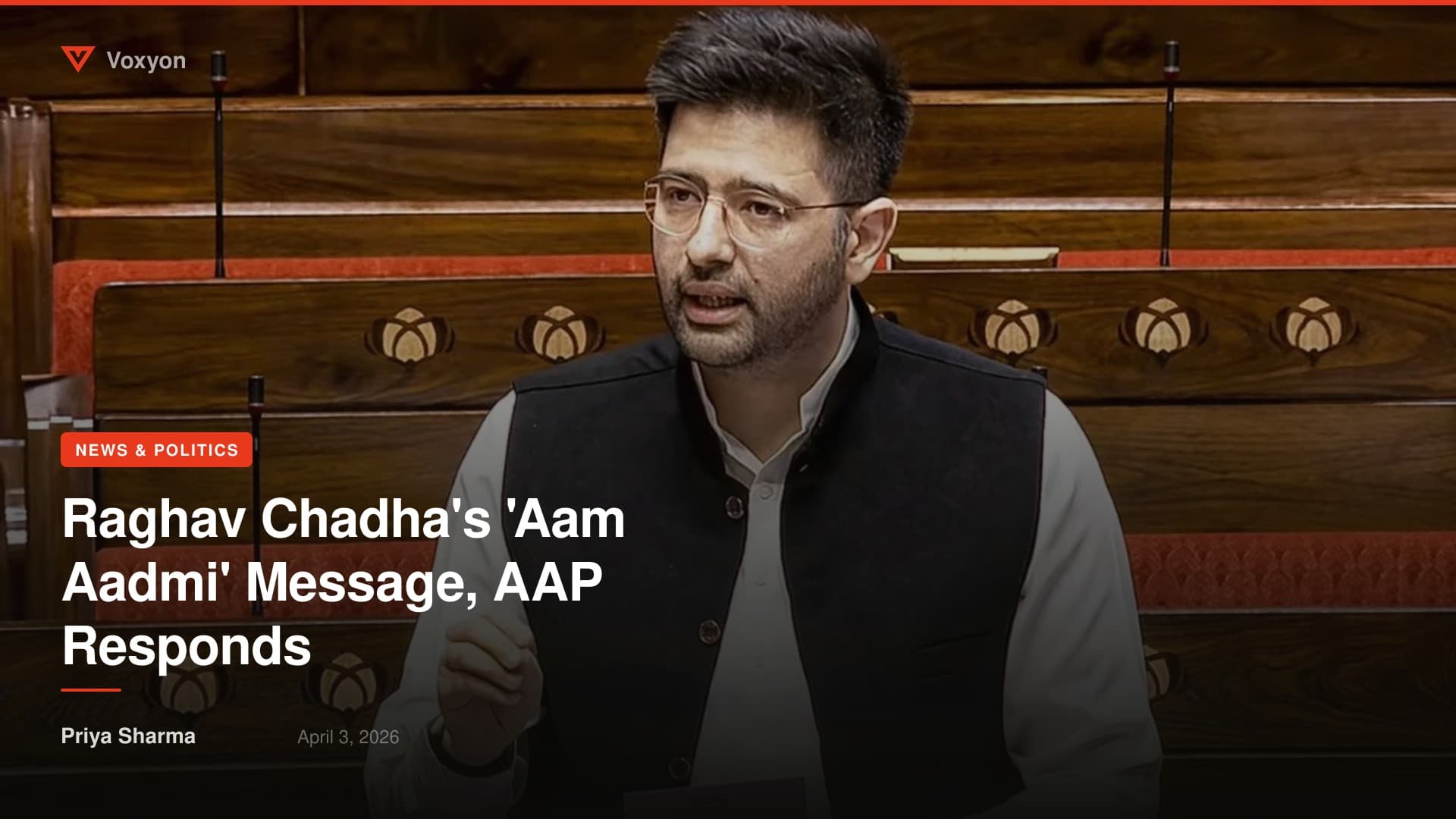
Raghav Chadha has recently been in the spotlight for his distinctive message that resonates with the 'Aam Aadmi' or common people. As a prominent member of the Aam Aadmi Party (AAP), Chadha's approach aims to connect on a personal level with the everyday struggles and aspirations of the public.
Chadha's Unique Perspective
Raghav Chadha's message is rooted in addressing the concerns of ordinary citizens. By focusing on issues that directly impact the common man, he attempts to bridge the gap between the public and politics. His speeches and public appearances often highlight the importance of transparency and accountability in governance.
Chadha emphasizes the need for policies that cater to the everyday needs of the people. His rhetoric often includes calls for improved public services and a corruption-free administration. This approach has garnered attention for its directness and relatability.
These efforts reflect Chadha's commitment to making politics accessible and relevant to the masses, challenging the status quo of conventional political communication.
AAP's Supportive Response
The Aam Aadmi Party has responded positively to Raghav Chadha's 'Aam Aadmi' message. The party leadership supports his efforts to resonate with the public's concerns and dreams. This alignment between Chadha's message and the party's core philosophy strengthens their collective image.
AAP has consistently positioned itself as a party that prioritizes the needs of the common man. Chadha's message dovetails seamlessly with AAP's agenda, reinforcing the party's commitment to grassroots politics.
This support from AAP not only amplifies Chadha's reach but also bolsters the party's image as a force for change that listens and responds to the voice of the people.
Impact on Public Perception
Chadha's approach appears to be reshaping public perception of political engagement. By focusing on relatable issues, he encourages more citizens to become involved in the political process. His message simplifies complex political jargon, making it accessible to a wider audience.
This method of communication might inspire other political figures to adopt a similar approach, potentially leading to a shift in how politics is conducted. If more politicians focus on the everyday concerns of the public, it could lead to more inclusive and participatory governance.
The impact of Chadha's message is evident in the growing support and interest from various demographics, particularly among younger voters who appreciate transparency and sincerity.
Challenges and Criticisms
Despite the positive response, Raghav Chadha's 'Aam Aadmi' message is not without its challenges. Critics argue that while the message is appealing, translating it into actionable policies is the real test. Ensuring that these ideas lead to concrete changes is crucial for maintaining credibility.
Some skeptics question whether Chadha's approach is sustainable in the long run. They point out the difficulties in balancing populist messages with the complexities of governing a diverse and populous region.
Nevertheless, the criticism serves as a reminder of the hurdles political figures face when attempting to implement ambitious agendas. It underscores the importance of following through on promises with tangible results.
The Road Ahead
As Raghav Chadha continues to champion the 'Aam Aadmi' message, the coming months will be critical in determining its impact. If he and AAP can effectively translate this rhetoric into policy, it could set a new benchmark for political engagement.
The evolution of this message will be closely watched by both supporters and detractors. Success will depend on Chadha's ability to maintain momentum and deliver on the promises made to the electorate.
Ultimately, Chadha's approach presents an opportunity for political innovation—one that could redefine how parties connect with the people they aim to serve.